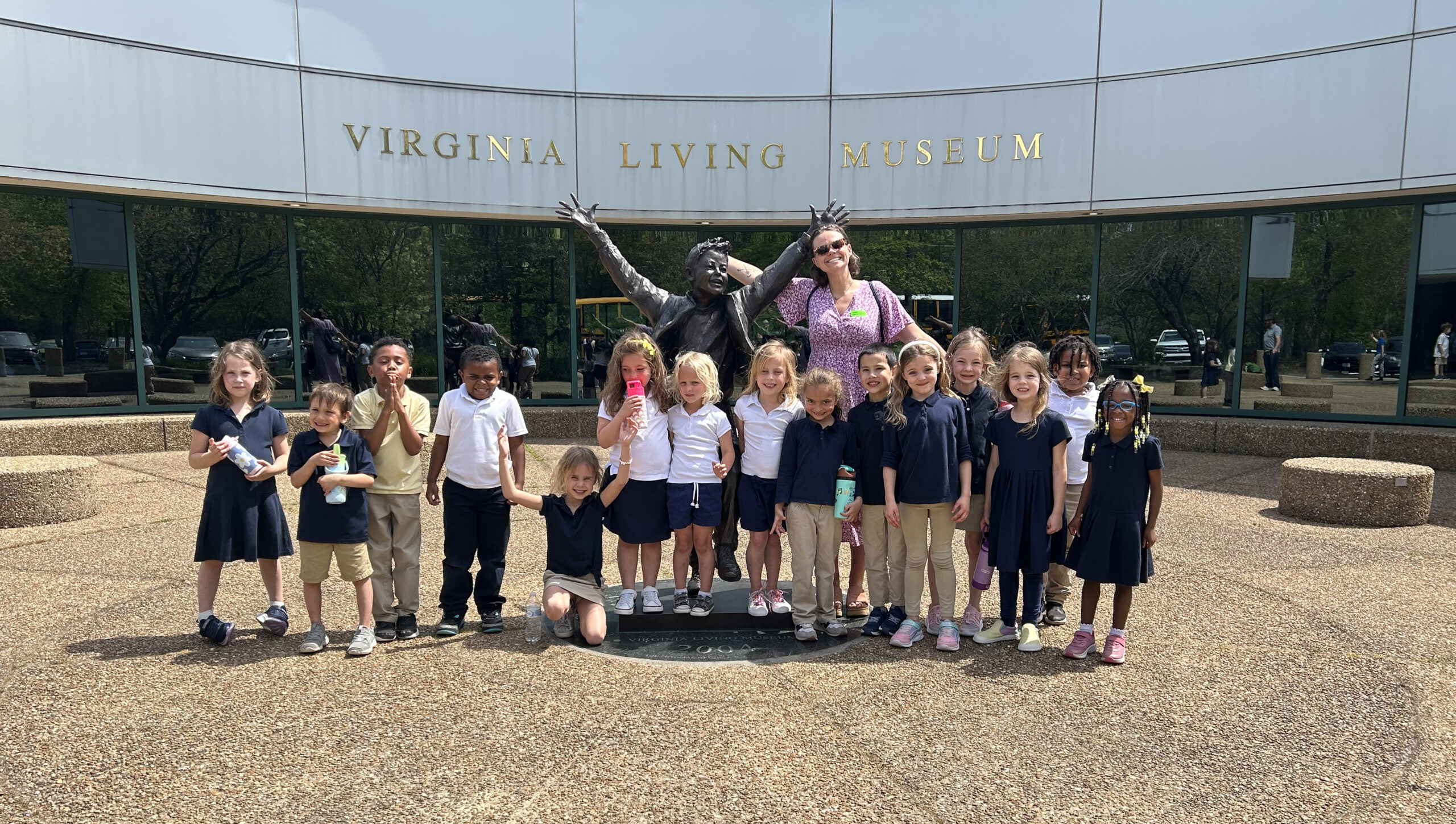
Kindergarten teacher Caroline Thatcher ’16 with her students in front of the Virginia Living Museum
On April 13, Hampton Roads Academy’s Kindergarten classes spent the day learning about their state’s wildlife, ecosystems, biodiversity, and more through hands-on activities at the Virginia Living Museum (VLM).
The museum’s exhibits gave some of HRA’s youngest students the opportunity to see and touch live organisms from all regions of the Commonwealth and all habitats, from the mountains to the ocean. The VLM also boasts a vast collection of non-living specimens that further enriched the students’ learning, including taxidermied animals, fossils, eggs, shells, and an Ice Age mastodon. During the visit, a visually stunning planetarium show made for an experience that was literally out of this world.
A long-running tradition for the Academy’s kindergarteners, the field trip not only provided the students with exposure to Virginia’s natural heritage in a fun and interactive format, but also deepened these young learners’ understanding of such important themes as conservation and environmental stewardship, connecting the classroom STEM curriculum to the obligations of responsible citizenship.
“The VLM is ideal because it incorporates educational programs, museum exhibits, and outside settings to expand students’ experiences with nature and science,” said Kindergarten teacher Josephine Kovalcik. “Each visit provides opportunities for new discoveries.”
“Making the Material Come to Life”
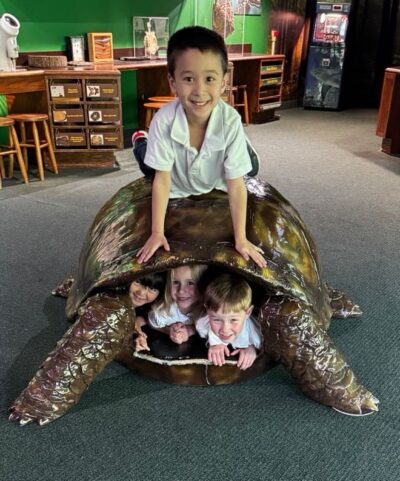
Poking around inside: students have fun exploring a tortoise shell
The wide array of species and subjects featured in the VLM perfectly mirrors the impressive breadth of HRA kindergarteners’ studies on the natural world. Their day at the museum was a whirlwind tour through a range of topics they had addressed in the classroom—from plant and animal life to celestial bodies and taxonomic classifications—vividly and tangibly elevated by being brought into three dimensions.
“Students can only learn so much in the classroom through pictures and books,” Kindergarten teacher Caroline Thatcher ’16 observed. Students’ understanding reaches new heights, she explained, “when they have the opportunity to travel off campus with their classmates and see the pictures come to life.”
Destiny Lindsay, Thatcher’s fellow Kindergarten teacher, echoed her praise for the value the Virginia Living Museum adds to the curriculum. “Educators at the VLM help enhance our instruction by making the material come to life,” she said. Having visited the museum since she herself was in elementary school, Lindsay stressed that the unique strength of HRA’s partnership with the VLM lies in the Kindergarten team’s close collaboration with the staff to ensure that activities are not only age-appropriate for students, but also “thoughtful, diverse, and content-specific.”
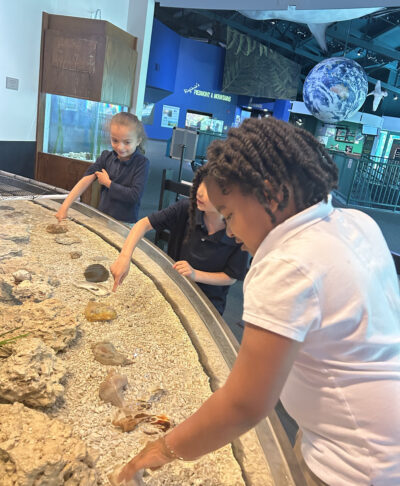
Hands-on learning: the kindergarteners learn about shells and marine life by reaching into a tank to touch an array of specimens
As they toured exhibits highlighting the animals and habitats of Virginia’s Appalachian coves, Piedmont, cypress swamps, and coastal waters, students were able to connect first-hand observations to material they had learned throughout the year covering ecology, food chains, landforms, waterways, natural cycles, and more. Displays on Virginia’s underground treasures, such as fossils, rocks, and minerals, made more abstract concepts such as natural resources and extinction concrete and engaging.
The students also participated in two special educational programs that provided an interactive and stimulating glimpse into the natural world on multiple scales, from the smallest creatures to vast cosmic phenomena.
A “Wonderful Wildlife” presentation, designed specifically for Lower School-aged children, allowed the kindergarteners to meet a variety of live animals—reptiles, mammals, birds, fish, and invertebrates—and discover their role in the ecosystem. Then, in the darkness of the museum’s Abbitt Planetarium & Observatory, the “Virginia Skies” program gave students the opportunity to apply their knowledge of the solar system and the shifting seasons as a staff astronomer guided them through the constellations, planets, and other celestial bodies visible from the Commonwealth in the early spring night sky.
“Caring about the World around Them”
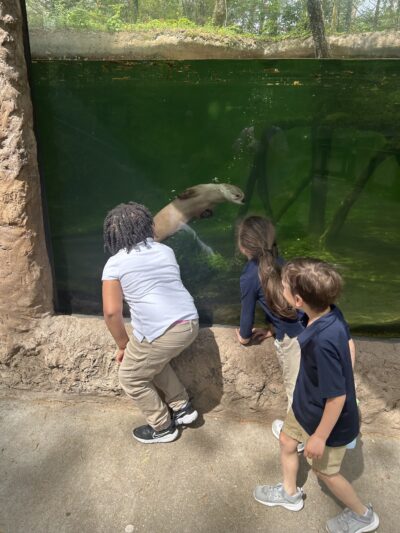
Up close and personal: students meet a northern river otter
Marveling at the wonders of the cosmos and interacting with native Virginia species are of course fun and memorable ways for young students to build a strong foundation in key scientific concepts. However, as HRA’s Kindergarten teachers stressed, visiting the VLM each year achieves far more than reinforcing and expanding on the classroom curriculum.
What makes this field trip “unlike any other,” according to Lindsay, is the Virginia Living Museum’s unique ability to spark “enthusiasm for what our state and region have to offer.”
Thatcher agreed. Whether they were born in the Commonwealth or their families recently moved here, she said, there is value in encouraging young students to “learn about the unique natural heritage of Virginia. At this age, it is really about them noticing and caring about the world around them.”
Nothing makes a student care about local wildlife, ecosystems, and conservation efforts quite like experiencing them first-hand. And when students develop an investment in the natural world at an early age, they lay a foundation for a lifetime of engagement with environmental causes that affect their community and the planet as a whole. HRA starts building this foundation in Kindergarten in order to shape each Navigator into an ethical, service-minded future leader.