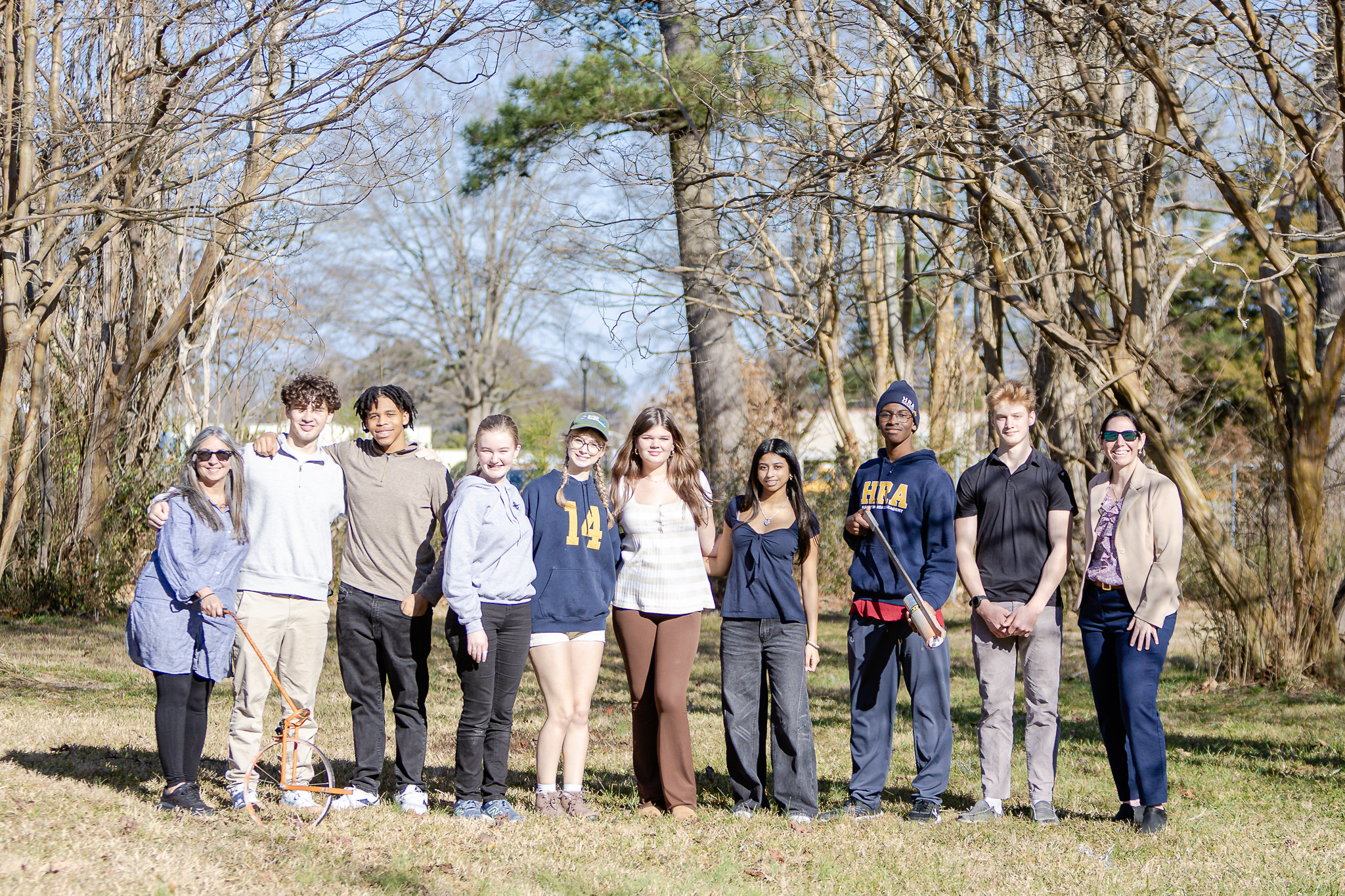
Upper School science teachers Dr. Maribel Gendreau (far left) and Lauren Oaks (far right) accompany members of the Sustainability Club on a visit to the plot they will be rewilding in partnership with the Mariners’ Museum and Park
As soon as they returned from their winter break, the freshmen, sophomores, and juniors of Hampton Roads Academy’s newly formed, student-run Sustainability Club embarked on a partnership with the Mariners’ Museum and Park in Newport News to convert a nearby plot of land back into a native meadow.
The first collaboration of its kind between a high school and the Mariners’ Museum, the rewilding initiative was made possible by a grant from the Walking Softer Foundation, a nonprofit organization that works to raise awareness about challenges confronting the planet and empower student-led environmental projects through investments, awards, and scholarships.
According to Upper School biology teacher Dr. Maribel Gendreau, who serves as faculty sponsor for the Sustainability Club, this inaugural initiative reflects her students’ mission “to turn ideas into hands-on projects that make a difference at school and beyond.”
“What excites me the most about the rewilding project is its ability to make a difference in our community,” said sophomore Henry Kaplow ’28, the club’s founder and president. “Restoring native meadows like these is really important because it expands the habitat of native plants and animals while restoring the area to its original beauty. I hope this project will positively impact the Mariners’ Museum and provide a framework for other schools to follow in our footsteps.”
Planting Seeds
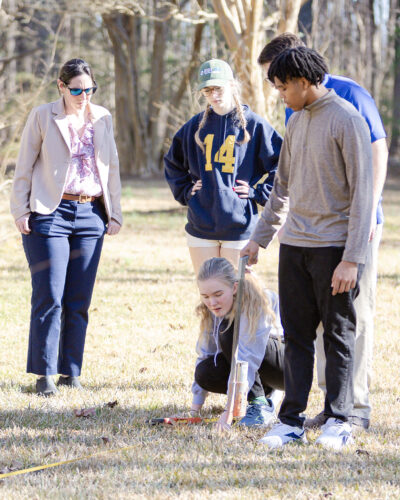
Students measure and mark the boundaries of the plot they will seed with native plants
The Sustainability Club directed the restoration project from the earliest stages of planning in fall 2025. Following initial conversations between Gendreau and the Mariners’ Museum team about the idea of rewilding the local area, the students met directly with their partners at the museum via Zoom to discuss next steps. The club quickly secured funding by submitting a project presentation to Walking Softer.
On Wednesday, January 7, the students hit the ground running with an initial visit to the 10,000-square-foot site off Copeland Lane, near the museum, that they will work to transform in the coming months. With help from Gendreau and Upper School chemistry teacher Lauren Oaks, club members measured the plot, marked its boundaries, and tagged invasive crape myrtles for removal. That Friday, the trees were removed, setting the stage for three rounds of soil tilling over the span of four weeks.
Meanwhile, students will meet to research native Virginia grasses and flowers, selecting and ordering plants based on their knowledge of the history of the Mariners’ Museum site. This meticulous process will ensure that the species they plant thrive and attract pollinators and other wildlife to the plot.
After designing a planting layout, the club plans to return to the site on February 21 to spread seeds, cover them with straw, and erect signage and a deer-deterrent fence. On subsequent visits, the students will monitor and document the progress of the restoration through photographs and video. They will also install cameras to study which insect and larger animal species are attracted to the meadow as it returns to a wild state.
The Start of a Community Effort
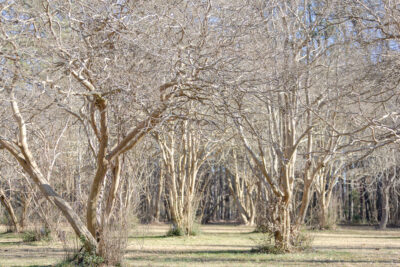
Invasive crape myrtles removed to clear space for the return of native flora and the restoration of local animal habitats
As Gendreau explained, this project will allow members of the Sustainability Club to apply what they have studied in class about ecosystems, native plants, and human impact to a real-world challenge, empowering them to play an active role in improving the local environment. Through sustainable food production activities in the Martha H. Patten Hydroponics Lab and STEAM Classroom, students have already learned about approaches that can promote healthy, resilient ecosystems. Now, by rewilding a plot of land just a stone’s throw away in Newport News, Gendreau said, the club will “improve soil health, increase biodiversity, and help communities learn how humans can repair and coexist with the natural environment.”
She predicted that a successful transformation of the site will “inspire schools and clubs in the area to partner with the Mariners’ Museum to rewild additional plots until the area is fully rewilded.”
For the students, the prospect of a larger community effort stemming from their work is the most exciting aspect of this initiative.
“I hope that if this project is seen by the public,” said ninth grader and Sustainability Club member Grace Bradley ’29, “they will have a sense of appreciation for nature and the knowledge that change is being made to make a healthier Earth.”
“The most important lesson I’ve learned in the Sustainability Club is that change isn’t something you can do by yourself. It takes a group of like-minded people to get the job done,” she added.
Fortunately, according to Kaplow, HRA is the perfect place to start cultivating a wider environmentally conscious community committed to restoring local biodiversity.
“There is a large group of students and faculty at HRA that share an interest in sustainability,” he said. “Having a dedicated place to interact with all of these amazing people is one way that the Sustainability Club has made HRA a better place.”