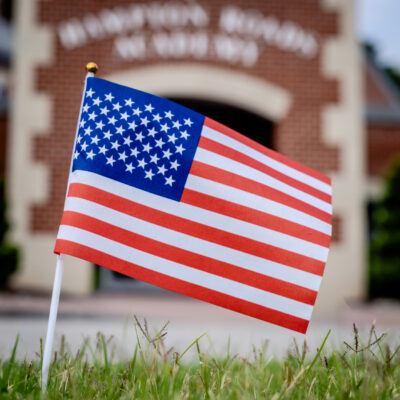
This summer, as we observe the 250th anniversary of the Declaration of Independence, Americans remember with pride the immortal words of that historic document. Addressing “a candid world” in July 1776, Thomas Jefferson, then a delegate to the Continental Congress, boldly proclaimed that “all men are created equal,” endowed with “certain unalienable Rights,” foremost among them being “Life, Liberty and the pursuit of Happiness.”
We may feel that we intuitively understand this passage. But that final phrase, “the pursuit of Happiness,” remains something of a puzzle for those of us seeking to connect to the founding era across a vast chasm of time. What exactly did Jefferson mean by happiness?
Historians will remind us that the future third president of the United States drew inspiration from the English philosopher John Locke, who wrote in his Second Treatise of Government (1689) of human beings’ natural right to “Life, Liberty and Estate”—that is, property or wealth. So is the “pursuit of Happiness” simply the quest to acquire wealth? Is this the right for which the Founders fought, for which they “mutually pledge[d] to each other [their] Lives, [their] Fortunes and [their] sacred Honor”?
Four years later, in 1780, John Adams, who would go on to be elected the nation’s second president, reflected on what independence would enable Americans to “pursue.” While stationed in Paris as part of the United States’ fledgling diplomatic corps, Adams wrote to his wife Abigail of the splendid artwork he had observed at Versailles, which the pressures of the Revolution left him little time to appreciate. “I must study Politicks and War that my sons may have liberty to study Mathematicks and Philosophy,” he explained. “My sons ought to study Mathematicks and Philosophy … in order to give their Children a right to study Painting, Poetry, Musick, Architecture, Statuary, Tapestry and Porcelaine.”
When President George Washington delivered his first annual address to Congress in 1790, he expressed his hope to make good on the vision Adams, his vice president, had outlined a decade earlier. Capping off a list of priorities he suggested to the Senate and House of Representatives, the commander in chief stressed the importance of investing in education—not merely in “Politicks and War,” but in “science and literature.”
“Knowledge is in every country the surest basis of public happiness,” Washington told his fellow elected officials, noting that education was especially vital in a country where the people are empowered to select their own representatives.
For the Founders, then, the meaning of happiness was twofold. On the one hand, it referred to a condition of society resulting from every individual’s ability to fulfill the duties of citizenship. On the other, it described the freedom to choose one’s own path, to dedicate oneself to the endeavors that imbue a life with purpose.

A bald eagle perched above the course at James River Country Club during the 2025 HRA Golf Classic
At Hampton Roads Academy, we consider it a privilege to welcome students into a learning community that advances both of these ideals.
The core of the Navigator experience is a wide-ranging and interdisciplinary liberal arts education. Our rigorous curriculum, spanning history, language arts, STEM fields, and more, not only equips students with a broad base of knowledge, but also challenges them to cultivate the critical thinking skills required to evaluate information, make civically responsible decisions, and distinguish themselves as ethical citizens and leaders.
Along the way, we offer students a wealth of opportunities, matched with personalized guidance, to help them discover their passions and achieve excellence in the pursuits that resonate with them, both as students at HRA and throughout their lives.
This process of exploration begins in the classroom but extends far beyond. It unfolds on the athletic field, where every Navigator has the chance to play an active role, collaborate with a team, and build the resilience to overcome any obstacle. It unfolds in the studio and on stage, where our creative students hone their artistic talents and share them with wider audiences both on and off campus. It unfolds in our state-of-the-art hydroponics laboratory, where students of all ages learn about a range of topics through the lens of agriculture while cultivating fresh produce for our dining hall and for families in our community. It unfolds through independent research projects that inspire our students to seek out partnerships with mentors in college and allow them to make meaningful contributions to a field even before they graduate. And it unfolds during internships, shadowing experiences, and other pre-professional opportunities offered through our REACH Initiative, allowing Navigators to apply their knowledge, explore their interests hands-on, and begin charting their career paths.
In short, we proudly unlock opportunities for students to pursue happiness—for themselves and for their communities. In this way, each and every day, we live the legacy of the Founders. As we mark our nation’s 250th birthday and HRA’s 67th, we believe that is worth celebrating.